Vladimir Putin: The Powerful Leader Who Shaped Modern Russia
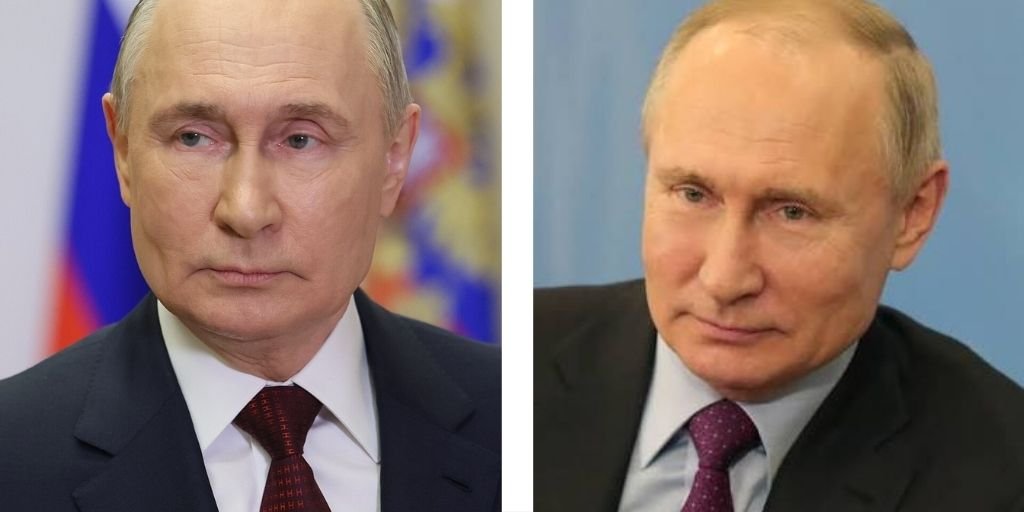
Vladimir Putin has been one of the most influential and controversial political figures of the 21st century. For more than two decades, his decisions have affected Russia’s domestic politics, economy, military, relationships with neighboring countries, and ties with major powers around the world.
But who is the man behind the powerful position? How did a former Soviet intelligence officer rise to the top of Russian politics? And why has his leadership become such a major subject of international debate?
Putin’s story is closely connected with the dramatic transformation of Russia after the collapse of the Soviet Union. He emerged during a period when many Russians were experiencing economic uncertainty, political instability, and a loss of national confidence. Over time, he built a political system centered on strong presidential authority and presented himself as a leader capable of restoring stability and Russian influence.
His supporters often credit him with strengthening the state and restoring Russia’s role as a major global power. His critics, however, point to restrictions on political opposition, pressure on independent media, and military actions abroad. Understanding both sides is essential to understanding his place in modern history.
Early Life and Education
Vladimir Vladimirovich Putin was born on October 7, 1952, in Leningrad, now known as St. Petersburg. He grew up during the Soviet period, when the country was one of the world’s two major superpowers.
His childhood was relatively modest. Accounts of his early years describe life in a communal apartment, where several families shared facilities. His parents worked hard, and the family lived through the difficult postwar years.
As a young man, Putin became interested in martial arts and eventually earned a black belt in judo. That interest became part of his public image decades later. Photographs and videos of him practicing sports, riding horses, swimming, and participating in outdoor activities helped create an image of physical strength and discipline.
Putin studied law at Leningrad State University. His education eventually led him toward a career in the Soviet security services rather than traditional legal practice.
This early background is important because it helps explain some of the characteristics associated with his later leadership: discipline, secrecy, strategic thinking, and a strong emphasis on state authority.
From KGB Officer to Political Figure
After graduating from university, Putin joined the KGB, the Soviet Union’s principal security and intelligence organization. He worked as a foreign intelligence officer and eventually spent several years in Dresden, East Germany.
His KGB career lasted from the 1970s until the collapse of the Soviet system. History’s account of his career notes that he worked in East Germany during the 1980s and later returned to Leningrad as the Soviet Union began to unravel.
The collapse of the Soviet Union had a major effect on Putin’s political thinking. He later described the breakup of the Soviet Union as a deeply significant geopolitical event.
After leaving the KGB, he entered politics in St. Petersburg. He worked with Anatoly Sobchak, a prominent reform-minded politician and former university professor who became mayor of the city.
Putin’s career then accelerated.
In the 1990s, he moved to Moscow and began working within the presidential administration. He eventually became director of the Federal Security Service, or FSB, which succeeded the KGB as Russia’s main domestic security organization.
In August 1999, President Boris Yeltsin appointed Putin prime minister.
Only a few months later, Putin’s political career changed dramatically.
The Rise to the Presidency
On December 31, 1999, Boris Yeltsin unexpectedly resigned as president of Russia. Putin, who was then prime minister, became acting president.
It was an extraordinary rise. Only years earlier, he had been a relatively little-known figure outside political circles. Suddenly, he was leading one of the world’s largest countries.
Putin won the presidential election in March 2000. His rise was helped by public desire for stability after the turbulence of the 1990s.
Russia had experienced inflation, economic disruption, political conflict, and the weakening of many state institutions following the Soviet collapse. Putin presented himself as someone who could restore order.
That message resonated with many citizens.
The change can be compared to a pendulum swinging from one extreme to another. After years of political uncertainty, many Russians became more comfortable with a stronger central government.
During his first presidential terms, Putin benefited from rising oil and gas revenues. The improving economy helped raise living standards and strengthened the government’s ability to provide social programs.
At the same time, his administration began concentrating political authority in the federal government.
Building a Stronger Central Government
One of the defining characteristics of Putin’s presidency has been the centralization of political power.
His government reduced the influence of regional leaders and strengthened the authority of Moscow. Independent television networks came under increasing state influence, while political opposition faced growing restrictions.
Supporters argued that stronger central control was necessary to prevent Russia from returning to the instability of the 1990s.
Critics saw something very different.
They argued that Russia was moving away from competitive democracy and toward an increasingly authoritarian political system.
This disagreement remains central to discussions about Putin’s legacy.
Elections have continued to take place, but international observers and opposition figures have repeatedly questioned the fairness of Russia’s political environment. Opposition politicians have faced legal challenges, imprisonment, exclusion from elections, or other forms of pressure.
The result is a political structure in which Putin has remained the dominant figure for an exceptionally long period.
His governing style also relies heavily on loyalty. Former intelligence officials, political allies, regional leaders, and business figures connected to the Kremlin have occupied important positions.
This network has helped Putin maintain a remarkable degree of political continuity.
The 2008–2012 Period
Russia’s constitution originally limited presidents to two consecutive terms. After serving two terms, Putin could not immediately run for a third consecutive presidency.
In 2008, Dmitry Medvedev became president, while Putin became prime minister.
On paper, this represented a change in leadership.
In practice, Putin remained an enormously powerful political figure. He continued to influence major government decisions and remained the leader of the ruling political establishment.
In 2012, Putin returned to the presidency.
The change also demonstrated one of the most important features of Russian politics during this period: Putin’s political influence was not dependent solely on occupying the presidential office.
His role as prime minister still left him at the center of national politics.
After returning to the presidency, Putin remained in power through subsequent elections. Constitutional changes later altered the framework surrounding presidential terms. Reuters reported in 2026 that the current constitutional arrangements allow Putin to potentially seek another term in 2030, which could theoretically keep him in office through 2036. Putin himself has said it is too early to discuss whether he would pursue that possibility.
Putin and Russia’s Economy
Economic policy has played an important role in Putin’s popularity and political strategy.
During his early years in power, high global energy prices provided Russia with substantial revenue. Oil and natural gas became important sources of government income and foreign currency.
The improved financial situation helped Russia recover from some of the economic problems associated with the 1990s.
The government also accumulated reserves and strengthened its ability to manage economic shocks.
However, Russia’s economy has faced significant challenges in later years.
International sanctions, restrictions on technology imports, changes in energy markets, military spending, and the continuing war in Ukraine have placed pressure on the economy.
Russia has increasingly developed commercial relationships with countries such as China and India as relations with many Western economies deteriorated.
Energy remains particularly important.
A Reuters report in September 2026 said Russia had reduced its expected 2026 oil production forecast to about 494.2 million metric tons, a level described as the lowest projected annual output since 2009. The report linked the changes to the war, sanctions, refinery disruptions, and attacks on energy infrastructure.
This illustrates a larger challenge for Putin: maintaining military strength and international influence while managing the long-term costs of confrontation.
Putin’s Foreign Policy and Global Influence
Putin’s approach to foreign policy has been shaped by the belief that Russia should remain a major independent power.
He has repeatedly opposed what he sees as excessive Western influence over Russia and neighboring countries.
His administration has sought stronger relationships with China, Iran, Belarus, North Korea, and other countries outside the traditional Western alliance system.
Russia’s relationship with China has become particularly important. Economic cooperation, energy exports, diplomatic coordination, and military ties have expanded significantly.
Relations with North Korea have also grown closer. In September 2026, Russia and North Korea opened their first road bridge across the Tumen River, symbolizing the strengthening of their strategic relationship.
Putin has also attempted to maintain Russia’s influence across the former Soviet space.
This has contributed to tensions with countries that have sought closer relationships with the European Union or NATO.
From Moscow’s perspective, NATO expansion is frequently presented as a security concern.
From the perspective of many neighboring countries, however, Russian pressure has encouraged them to seek stronger relationships with Western institutions.
This creates a complicated cycle: Russian concerns about NATO can encourage neighboring states to seek NATO membership, which in turn increases Moscow’s sense of insecurity.
Crimea and the War in Ukraine
Few issues have shaped Putin’s international reputation more dramatically than Ukraine.
In 2014, Russia seized and annexed Crimea following political upheaval in Ukraine. The move was widely condemned internationally and resulted in sanctions against Russia.
Eight years later, in February 2022, Russia launched a full-scale invasion of Ukraine.
The conflict became the largest war in Europe in decades.
Russia initially expected a rapid campaign, but Ukraine resisted strongly. The war developed into a prolonged conflict involving missiles, drones, artillery, armored vehicles, trenches, cyber operations, economic warfare, and international military assistance.
The consequences have been enormous.
Millions of Ukrainians have been displaced, cities and infrastructure have been damaged, and large numbers of soldiers and civilians have been killed or wounded.
The war has also transformed European security.
Finland joined NATO in 2023, ending its long-standing policy of military non-alignment, while Sweden later joined the alliance as well.
The conflict has also deeply changed Russia’s relationship with Europe and the United States.
As of September 2026, the war remains unresolved. Reuters reported that U.S. envoys Jared Kushner and Steve Witkoff had recently visited Moscow and Kyiv as part of renewed efforts to restart peace negotiations.
Yet major disagreements remain, particularly concerning territory, security guarantees, and Ukraine’s future relationship with Western institutions.
Leadership Style and Public Image
Why has Putin remained such a powerful political figure for so long?
One answer is his carefully constructed public image.
Putin has presented himself as disciplined, physically active, decisive, patriotic, and resistant to foreign pressure.
His public appearances often emphasize traditional ideas about Russian strength and national pride.
He has also used history as an important political tool.
World War II, the Soviet victory over Nazi Germany, Russian military achievements, and the country’s historical role as a major power frequently appear in official messaging.
For supporters, this creates a sense of national confidence.
For critics, it can be a way of controlling the political narrative and discouraging alternative interpretations of history.
Either way, image matters.
In modern politics, leadership is partly about what a government does and partly about the story it tells about what it is doing. Putin’s administration has been particularly effective at presenting a consistent narrative to its domestic audience.
Political Opposition and Criticism
Putin’s leadership has generated strong opposition both inside and outside Russia.
One of the most frequently cited criticisms concerns restrictions on political freedom.
Independent journalists and opposition politicians have faced significant pressure. Some media organizations have been blocked, designated under restrictive legal categories, or forced to leave the country.
The death of opposition leader Alexei Navalny in prison in February 2024 became another major international controversy. Western governments and Russian opposition figures accused the Kremlin of responsibility for a broader system of repression, while Russian authorities rejected such accusations.
The political environment has made it difficult for major opposition figures to compete with the Kremlin-backed establishment.
Supporters of Putin argue that Western criticism often ignores Russia’s security concerns and internal political realities.
Critics counter that national security cannot justify eliminating meaningful political competition.
This debate is unlikely to disappear soon.
Putin’s Relationship With the West
The relationship between Putin’s Russia and Western countries has changed dramatically since 2000.
Early in his presidency, Putin sought cooperation with the United States and European countries. There were periods of partnership on terrorism, trade, arms control, and international security.
But disagreements gradually increased.
NATO expansion, the war in Georgia in 2008, Russia’s actions in Ukraine, allegations of election interference, sanctions, cyber disputes, and the war beginning in 2022 all contributed to the deterioration.
By the middle of the 2020s, Russia and many Western governments were operating in an environment resembling a new form of strategic confrontation.
However, diplomacy has never completely disappeared.
Even during periods of intense conflict, governments continue to communicate because military confrontation between nuclear powers carries enormous risks.
That is why peace negotiations involving Russia, Ukraine, the United States, and European countries remain so important.
Putin’s Place in Modern History
How should Vladimir Putin ultimately be remembered?
That question cannot be answered yet because his political career is still continuing.
For supporters, he is the leader who restored Russia’s confidence after the chaotic 1990s. They credit him with strengthening government institutions, improving economic conditions during the early 2000s, rebuilding military capabilities, and returning Russia to the center of international politics.
For critics, his legacy is very different.
They point to authoritarianism, restrictions on political competition, pressure on independent media, corruption allegations, military intervention abroad, and the devastating consequences of the war in Ukraine.
Both interpretations are part of the historical debate.
Putin’s impact is not limited to Russia. His policies have changed European security, affected global energy markets, influenced relations between the United States and China, strengthened ties between Russia and several non-Western states, and contributed to a major rethinking of international diplomacy.
His leadership has also demonstrated how much influence one political figure can accumulate over a long period.
Putin’s Russia is therefore not simply a story about one person. It is a story about the collapse of the Soviet Union, the uncertainty of the post-Soviet era, nationalism, economic transformation, military power, and the struggle over what Russia’s place in the world should be.
Conclusion
Vladimir Putin’s career is one of the defining political stories of the modern era. From a KGB officer in Soviet Leningrad to the dominant figure in Russian politics, his rise has been extraordinary.
His supporters see a leader who restored stability and national strength. His opponents see a government that has steadily reduced political freedom and used military power to pursue its interests.
The reality is complicated. Putin has undeniably transformed Russia and influenced world affairs on a scale few modern leaders have matched. The consequences of his decisions will likely be debated for decades.
As the war in Ukraine continues and diplomatic efforts develop, his leadership remains at the center of international attention. Whatever happens next, Putin’s time in power has already left a deep mark on Russia and the wider world.
Frequently Asked Questions
1. Who is Vladimir Putin?
Vladimir Putin is the president of Russia and has been the country’s dominant political leader since 1999, serving as either president or prime minister during that period. He previously worked as a Soviet KGB intelligence officer.
2. When did Vladimir Putin become president of Russia?
Putin became acting president on December 31, 1999, following Boris Yeltsin’s resignation. He won his first presidential election in March 2000.
3. What did Vladimir Putin do before entering politics?
Before becoming a major political figure, Putin worked for the KGB, the Soviet Union’s main intelligence and security organization. He served in East Germany and later moved into political work in St. Petersburg.
4. Why is Vladimir Putin controversial?
Putin is controversial because of his long-term concentration of political power, restrictions on opposition and independent media, foreign military interventions, and especially Russia’s full-scale invasion of Ukraine in 2022. His supporters, however, argue that he restored stability and strengthened Russia’s international position.
5. Could Vladimir Putin remain president until 2036?
Russia’s current constitutional framework allows Putin to potentially seek another presidential term in 2030, which could theoretically extend his presidency to 2036. In June 2026, however, Putin said it was too early to discuss whether he would actually pursue another term.