Hugh Jackman: The Remarkable Journey of a Versatile Hollywood Star
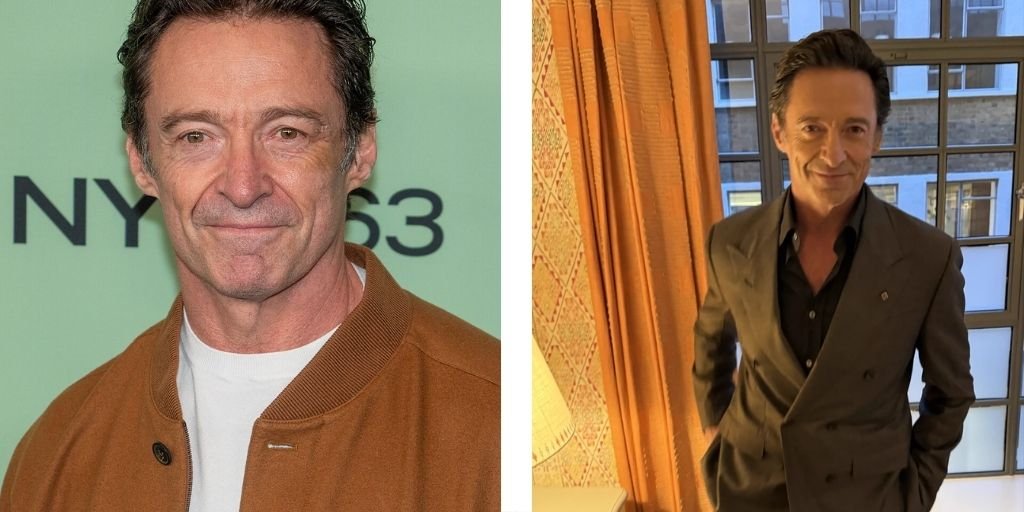
Hugh Jackman is one of those rare entertainers who seems equally comfortable on a movie set, a Broadway stage, or in front of a huge live audience. For many people, he will always be associated with Wolverine, the sharp-clawed mutant who became one of the most recognizable characters in modern superhero cinema. Yet limiting his career to that role would miss much of what makes him interesting.
From dramatic performances and musical theater to action films and family entertainment, Jackman has built a career around versatility. He has played characters that required physical strength, emotional vulnerability, humor, romance, and even singing and dancing. His journey also offers an interesting look at how an actor can grow beyond the role that first makes him famous.
So, what is it about him that has kept audiences interested for so many years? Perhaps it is the combination of talent, discipline, charisma, and a willingness to take risks. His career is like a well-built bridge: one side connects him to blockbuster entertainment, while the other reaches toward theater, drama, music, and personal storytelling.
Early Life and the Beginning of His Acting Journey
Hugh Michael Jackman was born on October 12, 1968, in Sydney, Australia. He grew up in a family with English roots and was the youngest of five children. His early years were shaped by both family experiences and a growing interest in performance.
Interestingly, acting was not always the obvious career choice for him. Jackman initially studied communications at the University of Technology Sydney. He later became interested in drama and decided to pursue formal acting training.
He attended the Western Australian Academy of Performing Arts, commonly known as WAAPA, in Perth. The training gave him a strong foundation in stage performance and helped prepare him for the professional world.
Like many actors, his early career involved smaller opportunities rather than instant international fame. He appeared in Australian television productions and stage performances, gradually developing his skills and reputation.
These early experiences mattered. Before audiences around the world knew his name, Jackman had already spent years learning how to perform in front of people, understand characters, and handle the demands of live theater.
That background would eventually become one of his greatest advantages.
The Breakthrough That Changed Everything
The major turning point came in 2000 when Jackman was cast as Logan, better known as Wolverine, in X-Men. At the time, the film was based on Marvel Comics characters, but superhero cinema had not yet become the massive cultural force it would later become.
Jackman was not originally the obvious choice for the role. He brought a relatively fresh face to a character who was physically intimidating, emotionally complicated, and often portrayed as a loner.
His performance immediately attracted attention.
Wolverine could have easily become a simple action character. Instead, Jackman gave him a mixture of anger, loneliness, humor, loyalty, and vulnerability. The character had enormous physical power, but his emotional wounds were often more important than his claws.
That contrast became central to the performance.
The success of X-Men transformed Jackman’s professional life. He went from being a respected Australian performer to an international movie star.
The role also followed him for more than two decades.
Wolverine and a Defining Chapter of His Career
Few actors become so closely connected to one fictional character. Jackman’s relationship with Wolverine is unusual because it lasted through multiple films, changing filmmaking trends, and different stages of the actor’s own life.
He appeared as Wolverine in numerous films, including X2, X-Men: The Last Stand, X-Men Origins: Wolverine, The Wolverine, X-Men: Days of Future Past, and Logan.
Each film offered a slightly different version of the character.
In The Wolverine, audiences saw a more introspective Logan. The story explored grief, identity, aging, and the consequences of violence.
Then came Logan in 2017, a film that presented a much darker and more mature interpretation. Instead of focusing purely on spectacular battles, the movie examined a tired character struggling with loss and a changing world.
Jackman’s performance was widely praised because it demonstrated how much emotional range could exist within a character usually associated with action.
For many viewers, Logan felt like the end of an era. Jackman had spent years physically preparing for the role, maintaining a demanding training routine and changing his appearance to fit the character.
Yet his story with Wolverine was not quite finished.
His return to the role in Deadpool & Wolverine introduced him to a new generation of viewers while connecting the character to the wider Marvel Cinematic Universe. The film also allowed Jackman to explore a more playful and comedic side of Logan.
It was a reminder that even after years of playing the same character, an experienced performer can still find new ways to approach it.
Beyond Wolverine: Exploring Different Genres
One of the most impressive aspects of Jackman’s career is that he did not allow Wolverine to become a creative cage.
After becoming famous for an action role, he continued to explore very different types of characters.
He starred in Kate & Leopold, a romantic comedy that showed his lighter side. He later appeared in The Prestige, Christopher Nolan’s psychological drama about competing magicians.
In Australia, he took on a major romantic adventure opposite Nicole Kidman. The film gave him an opportunity to combine drama, romance, action, and spectacle.
He also appeared in Real Steel, where he played a former boxer who becomes involved in the world of robot fighting. Although the movie featured futuristic technology and large action sequences, its emotional center was the relationship between a father and son.
This ability to move between genres has helped Jackman maintain a long career.
A successful actor cannot rely only on one skill. Jackman’s filmography demonstrates that audiences can accept him as a superhero, romantic lead, dramatic actor, comedian, and musical performer.
The Greatest Showman and His Musical Talent
If Wolverine introduced Hugh Jackman to millions of moviegoers, The Greatest Showman reminded audiences that his talents extend far beyond acting.
Released in 2017, the musical drama was inspired by the life of P. T. Barnum. Jackman played Barnum, a businessman and showman who dreams of creating a spectacular form of entertainment.
The film received mixed critical reactions, but its music became enormously popular.
Songs such as “This Is Me,” “A Million Dreams,” and “Rewrite the Stars” became major parts of the film’s cultural impact.
Jackman’s performance was particularly important because it allowed him to combine several skills at once. He had to act, sing, dance, and carry large musical sequences.
For audiences who had mainly known him as Wolverine, this was a striking change.
The success of the movie also reflected something Jackman had been doing for years: combining screen acting with his love of live performance.
Broadway, Theater, and the Importance of Live Performance
Before international film fame, Jackman had already developed a strong connection with theater.
His stage career became a major part of his professional identity, and he earned significant recognition for his Broadway work.
One of his most famous theater achievements came with The Boy from Oz, in which he portrayed Australian singer-songwriter Peter Allen. His performance earned him a Tony Award for Best Actor in a Musical.
That accomplishment was significant because Broadway demands a different type of discipline from film.
On a movie set, a scene can be filmed repeatedly. Theater does not offer the same luxury. Once the curtain rises, the performer must deliver the performance live.
Jackman has embraced that challenge.
His live shows have also allowed him to interact directly with audiences. Rather than simply presenting a polished movie performance, he can tell stories, sing songs, dance, and respond to the energy of the room.
For an entertainer, that kind of connection can be incredibly powerful.
A Performer Who Takes Physical Preparation Seriously
Jackman’s action roles have required substantial physical preparation.
Wolverine is a particularly demanding character because the role requires an imposing physical presence. Jackman has spoken publicly over the years about his training and preparation for the character.
His approach has involved strength training, conditioning, dietary changes, and careful preparation before filming.
However, the physical side of his career is only part of the story.
Playing a physically powerful character does not automatically make a performance convincing. The actor also needs to communicate personality through movement.
Wolverine’s posture, facial expressions, fighting style, and overall presence contribute to the character’s identity.
Jackman understood that.
Rather than treating physical preparation as simply building muscle, his performances used body language as part of the storytelling.
This is an important lesson for aspiring performers: preparation is not always visible, but audiences often notice the results.
Drama and More Emotionally Complex Roles
Jackman has also demonstrated an ability to handle difficult dramatic material.
In Prisoners, he played a father whose daughter disappears, leading him into an increasingly desperate search for answers. The performance required emotional intensity and showed a much darker side of the actor.
His role in Bad Education was another notable departure. The film, inspired by real events, gave him the opportunity to portray a character whose outward charm concealed serious problems.
These roles demonstrate why it is useful to look beyond an actor’s most famous character.
If someone only watches the superhero films, they might assume Jackman is primarily an action star. His dramatic work tells a different story.
He is interested in characters who have contradictions.
They may appear confident but feel vulnerable. They may want to do the right thing while making terrible choices. They may be funny one moment and deeply troubled the next.
Those contradictions make characters feel more human.
His Approach to Fame and Public Life
Long-term fame can be difficult to manage. Actors live under constant public attention, and audiences often feel that they know celebrities personally.
Jackman has generally maintained a reputation for being approachable, energetic, and professional.
His public image has also benefited from his connection to theater. Live performance often creates a different relationship between entertainer and audience than traditional celebrity culture.
Instead of being known only through interviews and movie appearances, Jackman has spent considerable time performing directly for audiences.
Of course, no celebrity career is free from challenges. Jackman’s professional journey has included difficult periods, demanding productions, and the pressure that comes with being associated with an iconic character.
Yet his career has remained remarkably adaptable.
He has continued to work across film, television, theater, music, and live entertainment rather than depending on a single platform.
Philanthropy, Business, and Life Outside Acting
Jackman’s interests extend beyond entertainment.
He has participated in charitable activities and supported causes involving children, education, poverty relief, and global communities.
He has also been involved in business ventures, including the coffee company Laughing Man Coffee, which was established with a social-impact mission.
The business was connected to efforts supporting farmers and communities.
This part of his career illustrates another interesting aspect of modern celebrity life. Successful entertainers often use their public profile to build businesses or support causes that matter to them.
For Jackman, these activities have provided another way to connect entertainment with broader social goals.
At the same time, his family life has remained an important part of his public story. He was married to actress Deborra-Lee Furness for many years, and together they have two children.
Their marriage and family experiences have been widely discussed throughout his career, although Jackman has generally maintained boundaries around private matters.
Hugh Jackman’s Influence on Popular Culture
It is difficult to discuss modern superhero cinema without mentioning Jackman’s contribution.
His version of Wolverine helped establish the character as more than a comic-book figure. Logan became a recognizable cinematic personality with emotional depth.
For younger viewers, Wolverine became one of the defining characters of the superhero era.
But Jackman’s influence goes beyond Marvel.
His success demonstrated that a performer could move between blockbuster movies and serious theater without abandoning either world.
He also helped remind mainstream audiences that musical performance could remain part of a major film career.
That combination is relatively uncommon.
Many performers become identified with one particular field. Jackman has managed to build bridges between several entertainment traditions.
What Makes Hugh Jackman So Appealing to Audiences?
Why do audiences continue to respond to him?
Talent is certainly part of the answer, but talent alone does not explain a career lasting decades.
Jackman has charisma, but he also seems comfortable showing vulnerability. He can play a powerful character without making that character emotionally distant.
He also has a natural sense of humor.
This matters because audiences tend to connect with performers who do not appear completely unreachable.
Another important quality is versatility.
Imagine an actor’s career as a toolbox. If there is only one tool inside, eventually its usefulness becomes limited. Jackman has built a much larger toolbox: drama, comedy, action, singing, dancing, stage performance, television, and live entertainment.
That variety has allowed him to reinvent himself without completely abandoning what audiences already love about him.
Perhaps most importantly, he appears to understand that an actor’s career is a journey rather than a single destination.
Legacy and the Continuing Story
Hugh Jackman’s career has already earned a significant place in entertainment history, particularly through his long association with Wolverine.
But his legacy is broader than the character.
He represents a generation of performers who successfully moved between cinema and theater while embracing very different genres.
His career also demonstrates the importance of evolution.
When an actor finds a role that becomes globally famous, there is always a danger of becoming trapped by it. Jackman largely avoided that problem by continuing to pursue new challenges.
From stage musicals to psychological dramas, romantic films, family entertainment, and superhero adventures, he has repeatedly shown that audiences are willing to follow him into unfamiliar territory.
His return to Wolverine demonstrates that revisiting a famous character does not necessarily mean moving backward. Sometimes an old role can become a new opportunity when approached with fresh energy.
For fans, that makes his career especially interesting to watch.
Conclusion
Hugh Jackman has built a remarkable career by refusing to be defined by just one performance. Wolverine may remain his most recognizable role, but his achievements in theater, musicals, drama, comedy, and live entertainment reveal a much broader performer.
His story is ultimately about versatility and longevity. He has continued learning, adapting, and taking on challenges even after reaching levels of fame that many actors never experience.
Whether audiences discovered him through X-Men, The Greatest Showman, Broadway, or another project, his career offers a simple lesson: lasting success often comes from being willing to grow beyond what made you famous in the first place.
FAQs About Hugh Jackman
1. What is Hugh Jackman best known for?
Hugh Jackman is best known internationally for playing Wolverine, also known as Logan, in the X-Men film series and related projects. He is also recognized for his Broadway performances and musical films such as The Greatest Showman.
2. When was Hugh Jackman born?
Hugh Jackman was born on October 12, 1968, in Sydney, Australia.
3. Did Hugh Jackman win a Tony Award?
Yes. Jackman won a Tony Award for Best Actor in a Musical for his performance as Peter Allen in the Broadway production The Boy from Oz.
4. Has Hugh Jackman appeared in musical films?
Yes. One of his most successful musical projects is The Greatest Showman, where he portrayed P. T. Barnum and performed several musical numbers.
5. Will Hugh Jackman always be associated with Wolverine?
Wolverine is certainly one of the defining roles of Jackman’s career, but his extensive work in theater, drama, comedy, musicals, and other genres has established him as a much more versatile performer than one character alone suggests.