
Donald Duck: The Timeless Disney Character Who Still Makes the World Laugh
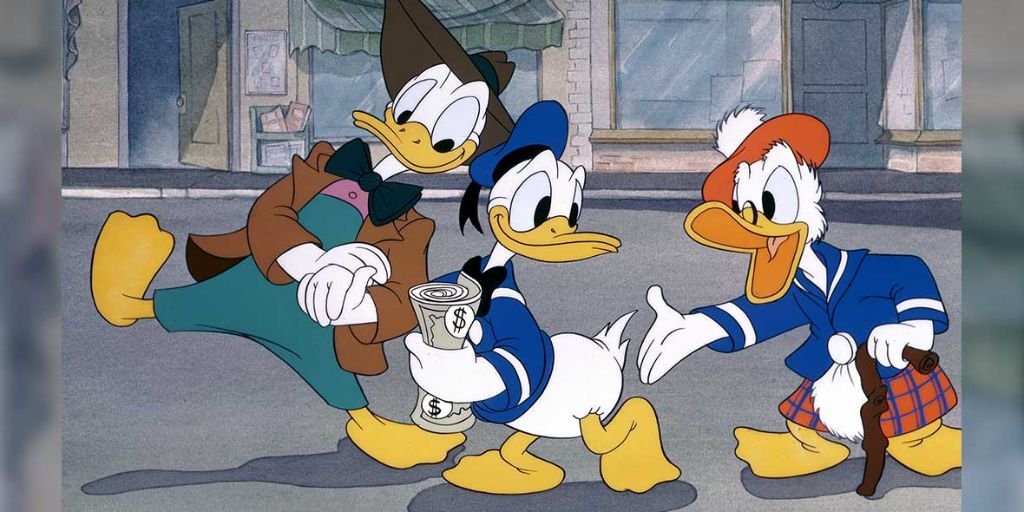
Donald Duck is one of those characters who seems to belong to everyone. Whether you discovered him through classic cartoons, comic books, television specials, merchandise, or Disney theme parks, there is something instantly recognizable about the short-tempered duck with the sailor shirt and famously unusual voice.
But what makes Donald so memorable after so many decades? Is it his temper, his stubborn personality, his endless bad luck, or the fact that his problems often feel surprisingly human? Perhaps it is all of these things together.
Created during the golden age of animation, Donald developed from a supporting cartoon character into one of Disney’s most recognizable personalities. Unlike the endlessly optimistic Mickey Mouse, Donald often struggles with ordinary frustrations. He loses his patience, makes mistakes, gets into arguments, tries to prove himself, and occasionally creates bigger problems while trying to solve smaller ones.
That imperfect personality is exactly what gives him charm.
The Origins of Donald Duck
Donald Duck made his official screen debut in the 1934 animated short The Wise Little Hen. The character was created during a period when animation was rapidly changing and audiences were becoming interested in personalities rather than simply visual gags.
Donald was developed at Disney during the early 1930s, with animator Dick Lundy among the important artists involved in shaping his early appearance and personality. His distinctive voice was closely associated with performer Clarence Nash, whose vocal performance became one of the character’s defining features.
At first, Donald was not designed to become the enormous cultural icon he eventually became. He was introduced as a humorous, somewhat lazy duck who was reluctant to help the Little Red Hen.
Yet audiences quickly noticed him.
Why? Donald was different.
Mickey Mouse was generally polite, cheerful, and dependable. Donald was impatient and argumentative. He could be selfish and dramatic. When something went wrong, he did not calmly accept it. He reacted.
That reaction became the foundation of his comedy.
Over time, Disney artists gave Donald a more sophisticated personality and a much larger range of situations. He could be a sailor, nephew, worker, explorer, neighbor, friend, uncle, or frustrated ordinary person trying to get through another difficult day.
In many ways, Donald became an animated mirror of everyday frustration.
Why Donald’s Personality Became So Popular
One of the most interesting things about Donald is that he is not perfect.
In fact, his imperfections are central to his appeal.
He gets angry quickly. He can be stubborn. He sometimes makes poor decisions. He frequently underestimates the consequences of his actions. A small inconvenience can become a major battle because Donald simply refuses to give up.
Think about how people react when technology stops working, plans suddenly change, or someone interrupts an important task. Most people experience frustration. Donald simply expresses that frustration at maximum volume.
That makes his comedy easy to understand.
His anger also creates a useful contrast with other characters. When Donald becomes irritated, calmer personalities around him can make his behavior even funnier. His emotional reactions often turn simple situations into elaborate comic disasters.
Another important trait is determination.
Donald may lose his temper, but he rarely walks away from a challenge. If he wants to accomplish something, he often keeps trying long after a sensible person would have stopped.
That stubbornness can be both his weakness and his strength.
It is almost like watching someone repeatedly push a door that clearly says “pull.” You know the solution is obvious, but Donald’s pride will not let him stop.
That combination of frustration, pride, determination, and vulnerability makes him feel surprisingly relatable.
The Distinctive Voice Behind the Character
Donald would not be Donald without his voice.
Clarence Nash played a major role in creating the vocal identity audiences associated with the character. The unusual speech pattern became one of the most recognizable sounds in animation.
At first, the voice might seem difficult to understand. Yet that is part of its charm. Donald’s emotions can often be understood even when every word is not perfectly clear.
His voice rises and falls with his mood. Excitement makes it energetic. Anger makes it explosive. Fear makes it frantic. Confusion gives it an almost musical quality.
This allowed the character to communicate emotion through sound as much as dialogue.
Voice acting in animation is often about more than simply reading lines. A performer has to create personality through rhythm, timing, pitch, and expression. Donald’s vocal performance demonstrates how powerful that approach can be.
Even people who have never watched a full Donald cartoon can often recognize him within seconds.
That is an extraordinary achievement for a fictional character.
Donald Duck During the Golden Age of Animation
The late 1930s and 1940s were especially important for Donald’s development.
During this period, animated shorts became more ambitious. Characters were placed in increasingly complicated situations, and filmmakers experimented with physical comedy, expressive animation, and fast-paced storytelling.
Donald became a central star.
Many stories placed him in ordinary environments where small problems escalated into chaos. He might be trying to complete a simple job, enjoy some peace and quiet, interact with his nephews, or deal with an irritating neighbor.
The basic formula was remarkably effective:
Donald wants something. Something gets in his way. Donald becomes frustrated. His attempts to fix the situation make everything worse.
The beauty of the formula is its simplicity.
The audience understands Donald’s goal immediately. They also understand why he becomes annoyed. Once his temper takes over, the situation becomes unpredictable.
This style of storytelling helped establish him as one of Disney’s major cartoon stars.
He was no longer simply Mickey’s supporting character. Donald had become a leading personality in his own right.
Donald Duck and the Three Nephews
Donald is also strongly associated with his three nephews: Huey, Dewey, and Louie.
The trio added another dimension to his stories.
Instead of simply dealing with external problems, Donald frequently had to deal with three energetic young ducks who were clever, mischievous, and capable of turning his plans upside down.
The relationship works because Donald is both an authority figure and a source of chaos himself.
He tries to teach the boys lessons, but his own temper and impatience often make the situation more complicated. The nephews, meanwhile, can be surprisingly resourceful.
Their adventures created opportunities for family comedy and helped establish Donald as more than a grumpy cartoon character.
He became an uncle.
That role gave audiences another reason to connect with him. Beneath his anger is often genuine affection for his family.
Donald may shout, complain, and become frustrated, but his relationships reveal a softer side.
This contrast is important because it prevents him from becoming a one-note character.
Donald and Daisy Duck
Daisy Duck provides another important relationship in Donald’s world.
Like Donald, Daisy has a strong personality. She is not simply there to react to Donald’s behavior. She can challenge him, disagree with him, and demand respect.
Their relationship frequently revolves around Donald’s inability to control his temper or make sensible decisions.
That creates familiar romantic comedy situations.
Donald wants to impress Daisy. He tries to appear confident or successful. Something goes wrong, and his plan falls apart.
The humor comes from the gap between what Donald wants others to see and what actually happens.
Yet their long-running relationship also demonstrates that Donald’s world is larger than slapstick. The characters have friendships, family relationships, rivalries, and emotional connections.
Those relationships give the cartoons their lasting personality.
Donald Duck and Chip and Dale
Some of Donald’s most memorable conflicts involve Chip and Dale.
The two small chipmunks are clever, energetic, and frequently interested in whatever Donald happens to be protecting.
A simple disagreement can quickly become a battle of strategy.
Donald has the advantage of size, but Chip and Dale often have the advantage of teamwork and cleverness. Donald’s temper then becomes another disadvantage because he can be so focused on winning that he fails to notice how the chipmunks are manipulating the situation.
This is a classic cartoon dynamic: strength versus intelligence.
The result is often a chain reaction of physical comedy.
The appeal of these stories is not necessarily who wins. It is watching the characters outthink, outmaneuver, and frustrate one another.
Donald is particularly entertaining in these situations because his reactions become part of the joke.
Donald Duck in Comic Books
Donald was not limited to animation.
He became an enormous figure in comic books and newspaper-style storytelling, particularly through Disney publications around the world.
One of the most influential figures in developing Donald’s comic-book world was Carl Barks.
Barks expanded Donald’s personality and created many stories that explored adventure, family, treasure hunting, travel, and everyday problems. He also introduced or significantly developed characters connected to Donald’s universe.
Among the most famous is Scrooge McDuck, Donald’s wealthy and adventurous uncle.
Barks’ stories helped transform Donald’s world into something much larger.
Donald was no longer simply getting angry about household problems. He could travel around the world, search for treasure, encounter unusual civilizations, compete with rivals, and become involved in elaborate adventures.
This broader universe gave the character remarkable longevity.
Comic books also allowed writers to explore Donald’s personality in greater depth than a short animated film usually could.
His flaws remained, but readers could see his intelligence, courage, loyalty, and determination as well.
Scrooge McDuck and the Expanding Duck Family
The introduction and development of Scrooge McDuck significantly expanded the world surrounding Donald.
Scrooge is wealthy, ambitious, adventurous, and extremely protective of his fortune. His relationship with Donald creates an entertaining contrast.
Donald often struggles financially and experiences ordinary frustrations. Scrooge, meanwhile, has enormous resources but is equally obsessed with solving problems and protecting what he has earned.
Their relationship creates stories that can move from comedy to adventure almost instantly.
Other members of the extended Duck family and supporting cast also helped create a rich fictional universe.
This is one reason Donald’s popularity has survived for generations.
He does not exist alone.
He belongs to a large network of characters, each with different personalities and relationships.
That gives creators countless opportunities to tell new stories.
Donald Duck During World War II
Donald also appeared in wartime-themed animation during the 1940s.
Some of these productions were created in the context of wartime propaganda and reflected the political and social environment of the period. One of the best-known examples is Der Fuehrer’s Face, released in 1943.
The short was very different from the simple comedy associated with Donald’s earlier adventures. It placed him in a satirical wartime setting.
The production won an Academy Award for Best Short Subject.
Donald also appeared in other wartime cartoons, including stories connected with military service.
These films are historically interesting because they show how popular entertainment can reflect the era in which it is created.
They also demonstrate how flexible Donald’s character had become. He could appear in comedy, adventure, family stories, and historically specific productions.
Today, these wartime cartoons are generally viewed with awareness of their historical context rather than simply as ordinary children’s entertainment.
Donald Duck’s Personality Compared With Mickey Mouse
Donald and Mickey represent two different approaches to cartoon storytelling.
Mickey is usually associated with optimism, friendliness, and confidence.
Donald represents frustration, determination, and imperfection.
Neither approach is inherently better.
They simply create different kinds of comedy.
If Mickey encounters a problem, he may calmly look for a solution. If Donald encounters the same problem, he may shout at it, argue with it, attempt several increasingly ridiculous solutions, and accidentally create three additional problems.
That contrast makes the characters work well within the same universe.
Donald gives audiences permission to laugh at frustration.
And perhaps that is why he remains so relatable.
Most of us have had moments when everything seems to go wrong. Donald simply experiences those moments with much more dramatic sound effects.
The Global Appeal of Donald Duck
Donald’s popularity extends far beyond the United States.
Disney characters have been distributed internationally for decades, and Donald became especially popular through comics, television, merchandise, and localized publications.
Different countries have developed their own traditions around Disney comics and stories.
One reason for Donald’s international appeal is that his humor often depends on situations rather than complicated cultural references.
Everyone understands being annoyed.
Everyone understands trying to accomplish something and failing.
Everyone understands dealing with difficult relatives, unexpected problems, stubborn rivals, and embarrassing mistakes.
That universality makes Donald surprisingly adaptable.
Even when dialogue is translated into another language, his physical reactions, facial expressions, and distinctive voice can continue to communicate the joke.
Donald Duck in Modern Popular Culture
Donald remains an important part of Disney’s larger entertainment universe.
He appears through merchandise, attractions, television programming, comics, collectibles, games, and other forms of media.
His visual design is also incredibly recognizable.
The sailor shirt, cap, orange bill, and expressive eyes form a character silhouette that can be identified almost instantly.
This is valuable in popular culture because a strong character design can survive changes in technology.
Donald began in hand-drawn animation.
Today, audiences encounter characters through digital animation, high-resolution screens, mobile devices, theme parks, and interactive entertainment.
Yet Donald still works.
His personality does not depend on one particular technology.
The same angry expression that made audiences laugh decades ago can still work today.
Why Donald Duck Has Lasted for Generations
What explains such extraordinary longevity?
The answer is probably not one single quality.
Donald combines several powerful ingredients.
First, he is recognizable. His appearance and voice are unique.
Second, he is emotionally expressive. Audiences immediately understand whether he is angry, excited, nervous, proud, or confused.
Third, he is flawed. Perfect characters can sometimes feel distant. Donald feels more human because he makes mistakes.
Fourth, he is adaptable. He can work in short cartoons, comics, family stories, adventure narratives, and merchandise.
Finally, he is funny without always needing complicated explanations.
His stories often begin with something incredibly ordinary.
A meal.
A job.
A vacation.
A quiet afternoon.
A disagreement.
Then Donald gets involved.
Suddenly, the ordinary becomes ridiculous.
That is his magic.
The Lasting Legacy of a Famous Cartoon Duck
Donald Duck has become much more than a character from old animated shorts.
He represents an important chapter in animation history and remains one of the most recognizable figures created by Disney.
His journey from a supporting character in The Wise Little Hen to an international cartoon star shows how audiences can transform a fictional personality into something much larger than originally expected.
Donald succeeded because he was different.
He was loud when other characters were calm. He was impatient when others were patient. He failed when others seemed capable. And yet, despite everything, he kept going.
That may be the greatest reason people continue to enjoy him.
Life rarely goes exactly according to plan. Donald’s stories take that simple truth and turn it into comedy.
His temper may get him into trouble, but his determination keeps him moving.
His mistakes may cause chaos, but they also create unforgettable adventures.
And his relationships remind audiences that behind the shouting and frustration is a character capable of friendship, affection, courage, and loyalty.
For generations of viewers, Donald has been more than a cartoon duck. He has been a familiar source of laughter.
His world may be animated, but the emotions behind it are remarkably real.
Conclusion
Donald Duck remains a remarkable example of how a fictional character can survive changing generations, technologies, and entertainment trends. From early animation to comics and modern Disney culture, he has remained recognizable because his personality is both exaggerated and familiar. His anger, stubbornness, humor, loyalty, and determination give audiences plenty of reasons to remember him. Donald’s greatest strength may simply be that he turns everyday frustration into entertainment. Like a tiny storm cloud that somehow makes everyone laugh, he brings chaos wherever he goes—and that chaos is exactly what has kept him beloved for decades.
Frequently Asked Questions
1. When did Donald Duck first appear?
Donald Duck made his official animated debut in the 1934 short The Wise Little Hen. He was introduced as a supporting character but quickly became popular with audiences.
2. Who provided Donald Duck’s famous voice?
Clarence Nash was the performer most closely associated with Donald’s original and classic voice. His distinctive vocal style became one of the character’s defining features.
3. Who are Donald Duck’s nephews?
Donald Duck’s three famous nephews are Huey, Dewey, and Louie. They frequently appear alongside him in cartoons and comic stories.
4. Who is Donald Duck’s girlfriend?
Daisy Duck is Donald’s longtime romantic partner. She has her own strong personality and regularly challenges Donald’s behavior.
5. Why is Donald Duck still popular?
Donald remains popular because his appearance, voice, humor, and personality are highly recognizable. His emotional reactions and everyday struggles also make him surprisingly relatable to audiences of different ages.